
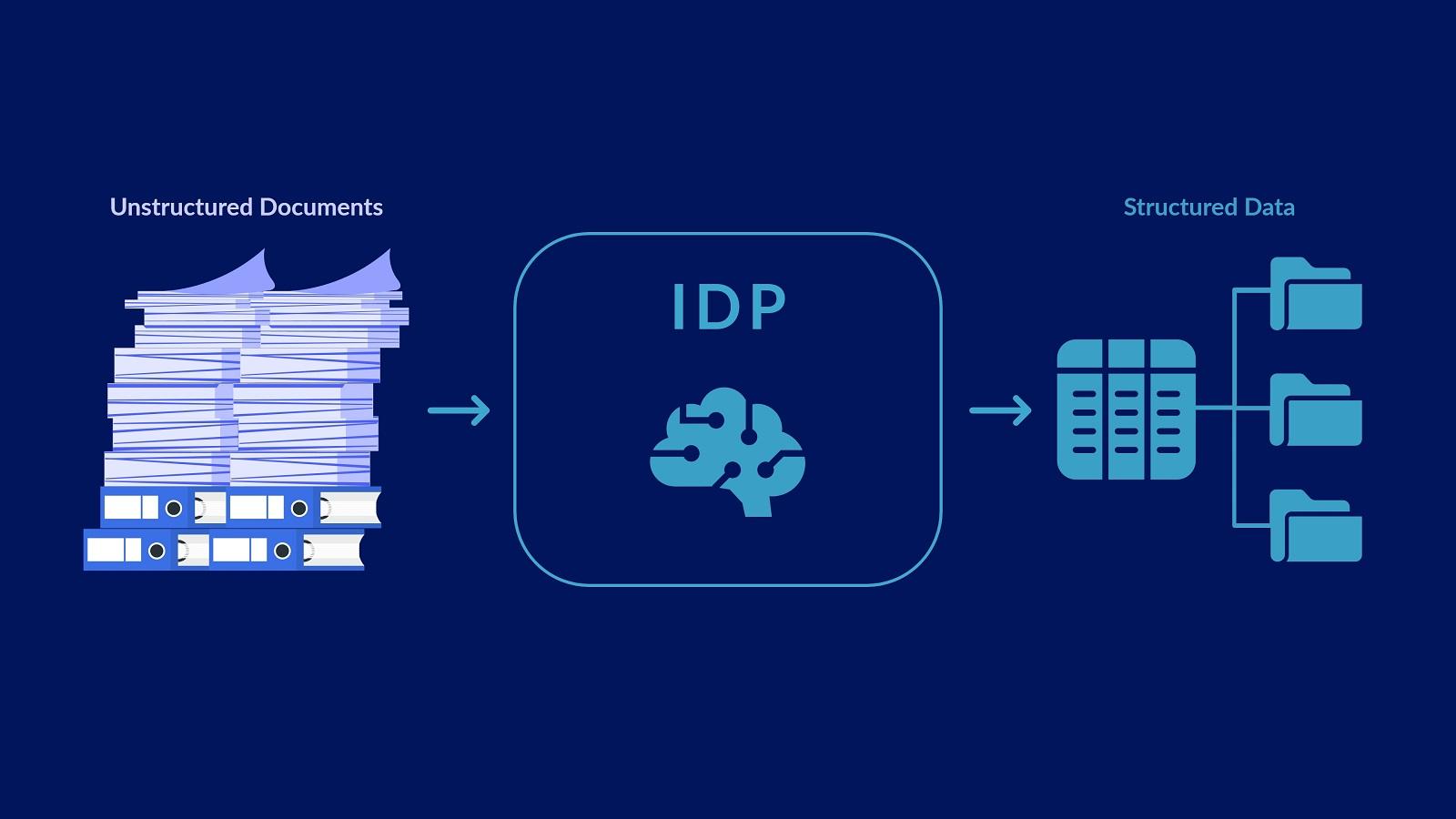
The Intelligent Document Processing Industry is maturing from standalone OCR tools into enterprise platforms that support mission-critical workflows. Organizations now expect IDP to handle end-to-end intake, classification, extraction, validation, and routing, with strong governance and monitoring. Industry adoption is accelerating because document work remains stubbornly manual in many processes, even when upstream systems are digital. Email attachments, scanned forms, and PDFs still dominate customer and supplier interactions. The industry’s direction is shaped by pressure to reduce operating costs, improve response times, and maintain compliance in regulated environments. At the same time, the rise of AI has raised expectations for accuracy and adaptability. Buyers want systems that learn new templates quickly and remain robust despite noisy inputs and changing document formats.
Security and compliance requirements are defining industry priorities. IDP deployments frequently process personal identifiers, financial records, medical data, and contractual terms. As a result, encryption, access controls, audit logs, retention policies, and secure model operations are central to product evaluation. The industry is also seeing a stronger focus on transparency: organizations need to understand how a field was extracted and where it came from in the document. This is especially important when outputs affect payments, risk decisions, or legal obligations. Standards for integration are also gaining importance, with API-based architectures and connectors to common enterprise systems. Vendors that support clean data handoffs into ERP, CRM, and workflow tools reduce implementation friction. System integrators play a major role in making these industry deployments successful at scale.
Industry competition spans multiple categories: pure IDP vendors, automation suite providers, content management platforms, and cloud AI services. This creates both opportunity and confusion for buyers. Many organizations run proofs of concept to compare accuracy on their own documents, then evaluate operational fit—review workflows, monitoring, governance, and support. Industry best practices increasingly emphasize starting with a well-scoped use case, measuring baseline performance, and expanding iteratively. Workforce impact is also significant: staff roles shift from manual entry to exception review and process control. Training and change management matter because even accurate extraction fails if users do not trust outputs or update statuses consistently. The industry is therefore investing in better user experiences and configurable workflows that match real operating needs.
Industry outlook suggests continued consolidation and packaging of vertical solutions. Buyers will expect faster onboarding, strong security, and measurable KPIs like straight-through processing and exception rates. Generative AI will expand capabilities, but also increase scrutiny around governance, hallucination risk, and explainability. The industry will likely standardize around hybrid human-AI workflows for high-stakes processes. Ultimately, intelligent document processing is becoming foundational infrastructure: it turns unstructured information into operational data that powers decisions and automation. Organizations that adopt IDP with strong controls will scale faster, reduce risk, and improve service delivery across finance, operations, and customer-facing workflows.
Top Trending Reports:

 English
 Arabic
 French
 Spanish
 Portuguese
 Deutsch
 Turkish
 Italiano
 Russian
 Romaian
 Portuguese (Brazil)
 Greek
Greek